
Brinkmann Research

Andreas Brinkmann

I currently lead the Organic Chemical Metrology (OCM) team at the Metrology Research Centre at the National Research Council Canada (NRC Canada).

Our mission is to accurately measure the amount of substance for organic molecules, peptides and proteins, linking these measurements to the SI units mole and kilogram. We achieve this through the production of pure chemical and matrix certified reference materials (CRMs) and the advancement of quantitative mass spectrometry (MS) and nuclear magnetic resonance (NMR) techniques. Our focus areas include cannabinoids and pesticides in cannabis, mycotoxins in food, and peptides and proteins significant for health. In addition to producing CRMs, which are sold directly through NRC and via MilliporeSigma, we support private businesses and other government departments with their needs for quantitative analytical analysis through revenue generating client projects.

My own research has focused on the development of advanced quantitative NMR techniques both in solution and the solid-state for applications in organic chemical metrology, including NMR crystallography, quantification of surface functional groups on nanoparticles and, recently, the application of parahydrogen-induced hyperpolarization in quantitative NMR.

Please don't hesitate to contact me with your specific materials characterization problem, or if you would like to work with me as co-op, summer student or visitor.

12th September 2025

Our collaboration with the Biophotonics Division at the Bundesanstalt für Materialforschung und -prüfung (BAM) resulted in our recent paper entitled Quantifying Surface Groups on Aminated Silica Nanoparticles of Different Size, Surface Chemistry, and Porosity with Solution NMR, XPS, Optical Assays, and Potentiometric Titration that has been published in Nanoscale Advances.

We quantified surface amino functonal groups for a large set of commercial and custom-made aminated silica nanoparticles using quantitative nuclear magnetic resonance (qNMR) spectroscopy, optical fluorescamine assays, potentiometric titration methods, and X-ray photoelectron spectroscopy (XPS).

Please find out more details under Publications.
Figure from paper

19th July 2025

Our paper entitled NMR Crystallographic Investigation Coupled with Molecular Dynamics Simulations Reveals the Nature of Disorder in Chlorpromazine Hydrochloride Solvatomorphs have been published in Molecular Pharmaceutics.

We presents a comprehensive investigation into the nature of the structural disorder of chlorpromazine hydrochloride solvatomorphs using a combination of nuclear magnetic resonance (NMR) crystallography and molecular dynamics simulations.

Please find out more details under Publications.
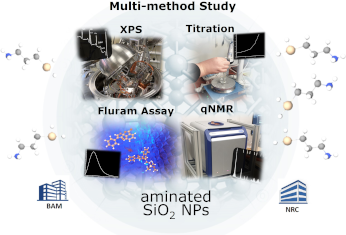
Figure from paper

11th March 2025

The final report for the Key comparison CCQM-K148.b—polar analyte in solid organic material: mass fraction of oxytetracycline have been published in Metrologia.

For this CCQM (Comité consultatif pour la quantité de matière / Consultative Committee for the Amount of Substance: Metrology in Chemistry and Biology) study for the first time the value for the final mass fraction of the analyte was obtained in a joined effort of the Organic Chemical and Biotoxin Metrology teams of the Metrology Research Centre of the National Research Council Canada, using two complementary quantitative nuclear magnetic resonance spectroscopy (qNMR) methods, utilizing internal and external standards for achieving traceability to the International System of Units.

Please find out more details under Publications.
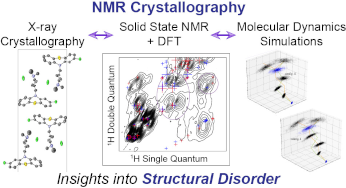
Figure from paper

10th February 2025

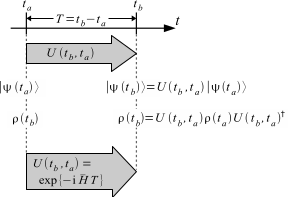
Finally, I have published the 2nd part of my Introduction to Average Hamiltonian Theory in the Journal of Magnetic Resonance Open.

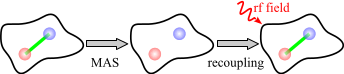
It presents in a comprehensive but educational manner two, more advanced examples for the application of average Hamiltonian theory in solid-state NMR spectroscopy, both to analyse and design rf pulse sequences: (i) The Rotational-Echo Double Resonance (REDOR) sequence, which recouples the heteronuclear dipolar coupling during sample rotation around an axis at the magic-angle of 54.74° with respect to the external static magnetic field. (ii) The Lee-Goldburg homonuclear dipolar decoupling sequence under static samples conditions and its improved successors, Flip-Flop Lee-Goldburg (FFLG) and Frequency-Switched Lee-Goldburg (FSLG).

Figure from paper

This 2nd part continues seemlessly the 1st part published in the special issue of Concepts in Magnetic Resonance in honor of Alex Bain.

The goal of the 1st part is to introduce average Hamiltonian theory in a rigorous but educational manner. The application to two composite pulses in NMR spectroscopy is used to demonstrate important aspects of average Hamiltonian theory.

Please find out more details under Publications.
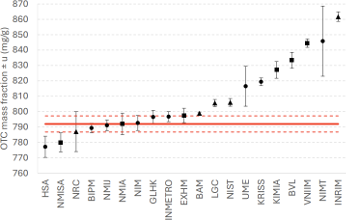
Figure from paper